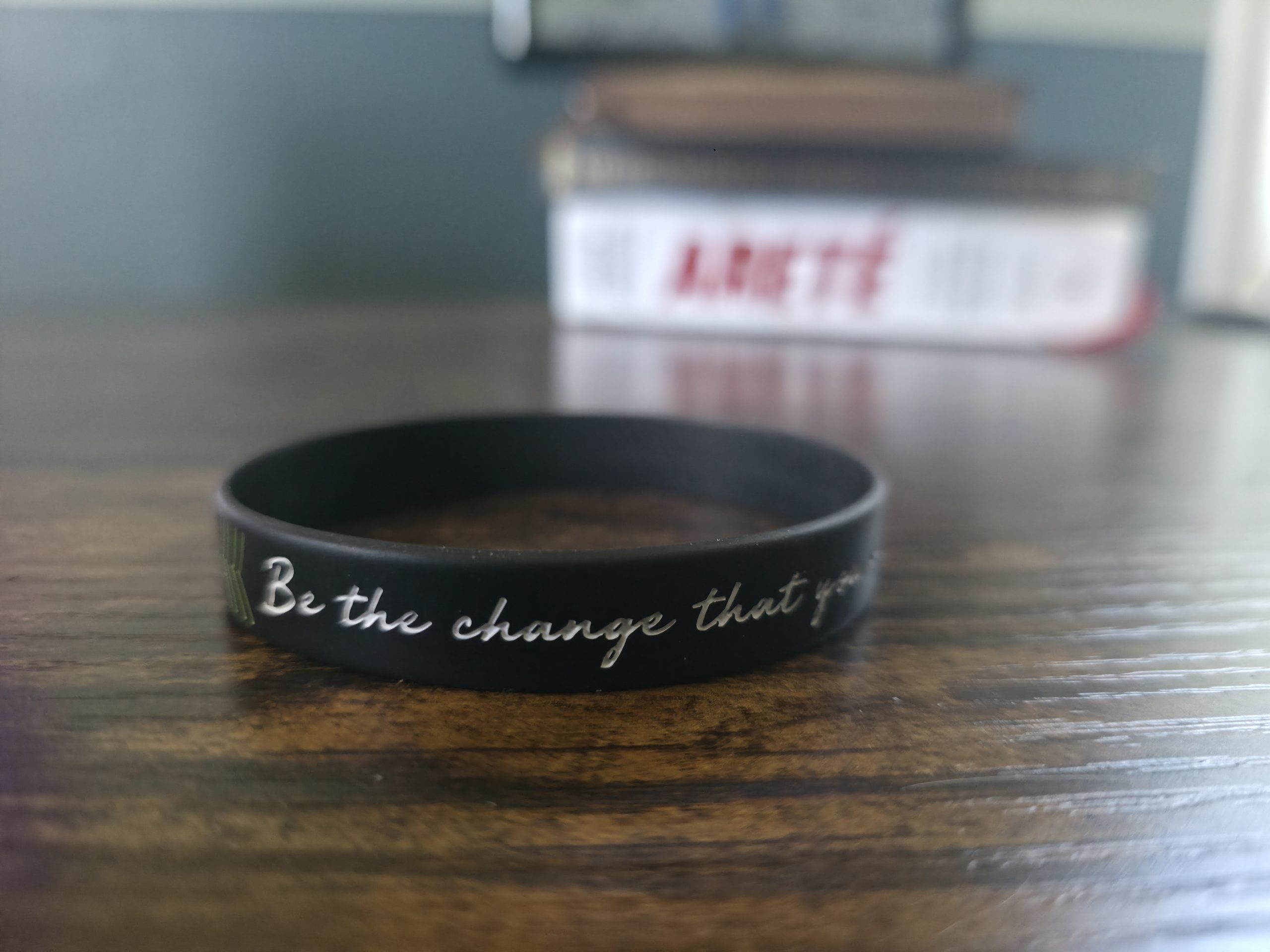
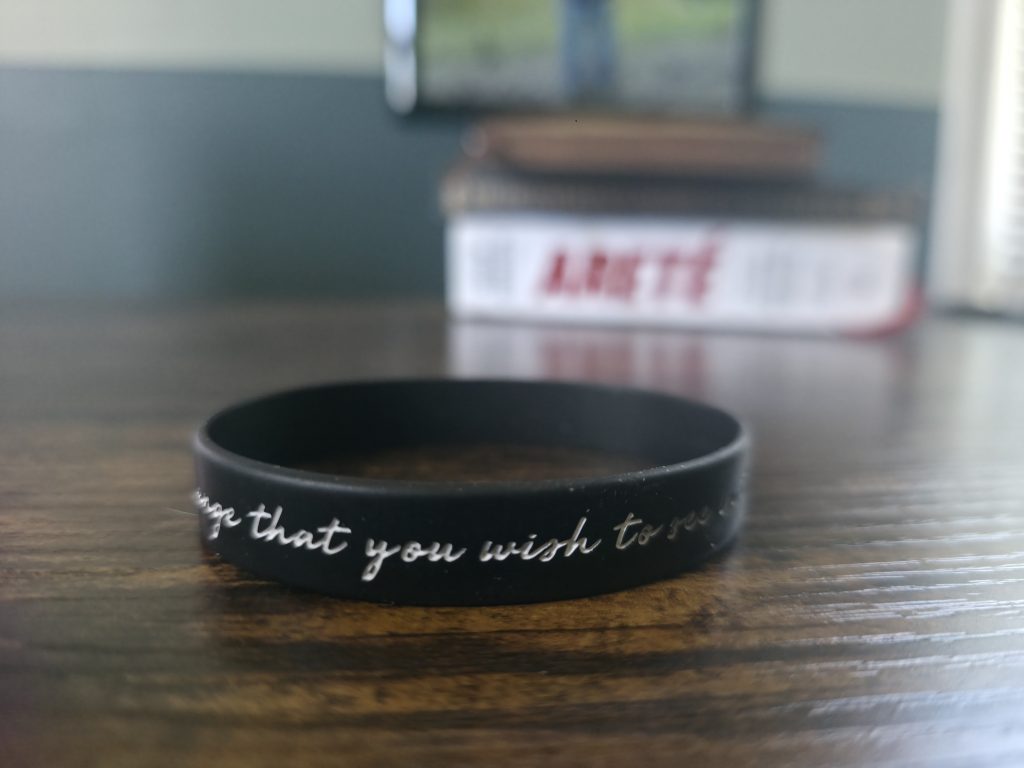
The bracelet on my wrist says be the change you wish to see in the world. I can’t tell you the last time I read the whole sentence at once. Most days I catch a fragment — change the world if it’s twisted one way, wish to see in the world if it’s twisted another. I assemble the whole thing in my head from glimpses caught while making coffee, while typing, while reaching for the motorcycle grip.
The work this object does isn’t center-stage work. It doesn’t demand an audience, and it doesn’t require me to sit in quiet contemplation to “receive” its message. It works because it is persistent. It works because it is peripheral. Most of the time, I forget it’s there until it catches on something.
The Ancient Practice of Recurring Cues
The idea that a man needs physical anchors to stay on track is as old as philosophy itself. The mind likes to think it’s in control — that once I decide to be disciplined, the matter is settled. But the brain is a leaky bucket. It leaks intent. It leaks focus. It leaks the values I claim matter most the moment a deadline looms or a car cuts me off in traffic
The Stoics understood this fragility better than most. Marcus Aurelius didn’t write his meditations for an audience; he wrote them as recurring reminders to himself. He was essentially leaving notes in his own path, knowing he would forget the person he wanted to be the moment the weight of the empire pressed down on him. The Stoics built this into their practice — keeping mortality and the value of the present deliberately in view, using whatever external reminders would do the work. Memento mori — Latin for ‘remember you will die’ — was the phrase that kept it sharp. The object is the anchor; the phrase is the practice. They were deliberate, external scaffolds for a mind that was prone to wandering. They were anchors dropped into the current of daily life to keep the practitioner from being swept away.
The Mechanism of the Cognitive Anchor
In some circles, people talk about objects like this as if they have a mystical power. They act like wearing a sentence on your wrist does the work for you. That’s fluff. It skips over the actual mechanism.
The truth is mechanical. The bracelet is a trigger — a physical cue that, through sheer repetition, points me back toward the person I said I’d be.
The Cost of Running Out
For a long time, I wore a single bracelet until the silicone finally gave up.
That was the real lesson.
I drift in small ways before I ever notice it. A little in tone. A little in attention. A little in patience. Daily Drift isn’t some dramatic collapse. It’s the accumulated cost of letting small moments go unattended because they seem too minor to matter. Then one day the whole day feels off and you can’t point to a single reason.
I didn’t just order one replacement. I bought two packs. I learned the cost of running out of the things that help me keep my word to myself. This wasn’t about the object’s price — it was about the value of the practice it enabled. You don’t search for what doesn’t matter, and you don’t double the order on something that isn’t load-bearing. The disappointment of that broken band was proof that the practice had taken root.
Practice Over Provenance
The bracelet isn’t special. It didn’t come from a mountain top. It wasn’t gifted by a guru. It’s a mass-produced item that likely cost less than a dollar to manufacture. There is a certain kind of person who thinks that for an object to carry meaning, it needs a grand origin story or precious material. That’s a distraction.
The value of a tool is found in its use, not its pedigree. This is a fundamentally Stoic perspective: the worth of the thing is in the practice it facilitates. A hand-carved talisman wouldn’t remind me to be better any more effectively than this worn silicone does. In fact, the cheapness is part of the point. It reminds me that the change the quote talks about isn’t a luxury item. It’s a utility. It’s blue-collar work.
I look at the band now and see the same thing happening again.
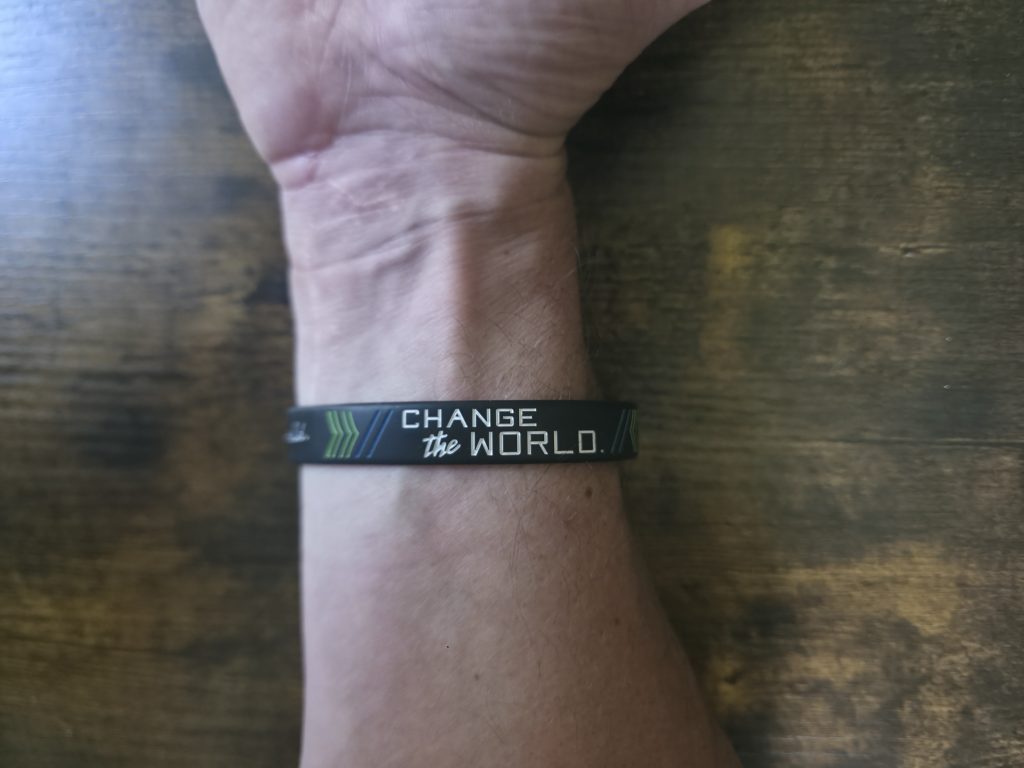
The edges are slightly smoothed down. The white ink in the lettering is starting to fade where it rubs against my desk while I write. That’s the record of a thousand moments where I chose to look at the reminder instead of falling back into the Hard Path’s opposite — the easy, mindless slide. The meaning didn’t come with the bracelet; I put the meaning into it by wearing it through the mundane, the difficult, and the boring.
Working at the Edges
The most dangerous part of self-growth is the revelation trap — the idea that change happens in big, cinematic moments of clarity. Real change happens at the edges of your attention, in the micro-decisions you make when no one is watching and you’re barely paying attention to yourself.
This is where the bracelet lives. It counters the Daily Drift precisely because it doesn’t demand center stage. If I had to stop and meditate on the quote for twenty minutes every morning for it to work, I would have stopped doing it years ago. Life is too loud for that. But life isn’t too loud for a fragment caught in the peripheral vision. It isn’t too loud for a catch on a jacket sleeve.
The drift is boring. That’s why it wins so often. It shows up when you leave the dish in the sink because you’ll get it later. When you answer a message with a little more edge than the situation requires. When you keep scrolling after you’re already tired. When you let one sloppy decision justify the next one because the day’s already “off” anyway. Nothing in those moments feels historic. That’s the problem. Most of your life is decided in moments that don’t look important enough to deserve attention.
When the reminder lives at the edge, it bypasses the ego’s defenses. It doesn’t feel like a lecture; it feels like an observation. It’s a quiet “oh, right” that happens while you’re doing the dishes or filling the gas tank. By living at the periphery, the commitment becomes part of the environment. It becomes as factual as the weather or the floor beneath your feet.
I look down at the wrist as I reach for the coffee. The bracelet has twisted again. I don’t get the full sentence. I never do. Just a fragment. …in the world.
Excellent words to think about!!
I just found this, months late. Thank you for reading! The bracelet is still on and still doing its job. Broke one last night, actually. The spare went on this morning.