
You can’t keep going to the barber shop and expect not to get a haircut. That’s a saying I grew up with. The point isn’t who’s holding the scissors. It’s that the place itself has a job, and the job will get done whether you came in for it or not. I’d heard the saying my whole life. I needed about a decade longer to actually live by it.
The physical world has a weight that willpower usually can’t lift. I spent years believing I was the exception to that rule. My internal compass, I figured, was calibrated well enough that I could stand in the middle of a storm and not get wet. I told myself that as long as my intentions were solid, the scenery didn’t matter.
I used to drive over to a nearby town to see a buddy. I did this for a long stretch after I’d made some big changes in my life. The orbit there pulled in a direction I’d spent years walking away from. Every time I got in the car, I’d convince myself it was going to be a good time. I’d tell myself I’d have fun, or that I’d get something out of the visit that I hadn’t gotten the last few times. I never did.
I never left that house feeling better than when I arrived. Every single time I pulled out of that driveway, I felt a heavy layer of depression settling in. I felt disappointed in myself, though I couldn’t always put a finger on why. My background anxiety, which I usually kept at a low hum, would be cranked up to a nine by the time I hit the highway. The math was undeniable: I kept showing up expecting a different result, and the environment kept doing its job.
The Gravity of the Daily Drift
Environments shape outcomes more than willpower ever will. You like to think of yourself as a fixed point, but you’re more like a piece of wood in a current. Jump into a river flowing south and it doesn’t matter how much you want to go north. You’re going south. The Daily Drift is a subtle, persistent pull that wins through proximity rather than force.
The strongest discipline I have ever built cannot survive a steady diet of the wrong place. If I surround myself with people who view life as a series of things to be endured or escaped, I will eventually start looking for the exit too. If I spend my time in rooms where the primary currency is gossip or short-term dopamine hits, my own values will start to erode at the edges. It isn’t a sudden collapse. It’s a slow, quiet wearing away of the person I am trying to become.

The Stoics understood this long before anyone coined the term “environment design.” They held a very clear position on the company a person keeps. To them, choosing who you associate with was a direct part of choosing who you are. They saw proximity to people who lacked virtue not as a personal failure of the friend, but as a practical hazard to the practitioner. They believed that our impressions are colored by the things we see and the words we hear every day. If you want to keep your mind clear, you have to be careful about what you let into it.
This isn’t about being judgmental or acting like I am better than the people I used to spend time with. It is a cold assessment of the cost of admission. Every environment has a price. Sometimes that price is paid in focus; sometimes it’s paid in mental health; often, it’s paid in the discipline required to stay on the path I’ve chosen.
Choosing Distance Before the Haircut
The Hard Path is often characterized by what you choose to do, but it is just as much about what you choose to avoid. Most people wait until a situation becomes unbearable before they make a move. They wait for the “haircut” to be so bad that they have no choice but to find a new barber. They stay in the orbit of the wrong energy until something catastrophic happens that forces a break.
I eventually stopped going to that buddy’s place. It wasn’t a dramatic confrontation or a bridge-burning moment. It was just a quiet, proactive decision to stop going out of my way to make myself feel bad multiple times a week. I looked at the emotional debt I was racking up every time I visited and realized I couldn’t afford the interest anymore.
Making that choice cost me something. It meant a friendship cooled down. It meant I had hours of time that I suddenly had to figure out how to fill differently. But what it bought was the foundation for everything else I’ve built since. When I stopped fighting the downward drag of that environment, I suddenly had the energy to actually start The Climb.
Rules for Unavoidable Rooms
I know that not every environment can be walked away from. There are jobs that feel like the barber shop. There are family gatherings where the energy is a direct threat to your peace. There are times when your current social circle is the only one you have, and the alternative is total isolation before you’re ready for it.
In those cases, the move isn’t avoidance. It’s mitigation. When I have to enter an environment that I know will try to do a job on me, I go in with specific exit conditions. Before I walk through the door, I’ve decided exactly how long I’m staying and what my “red lines” are. The visits stay short. I focus on a specific task or a specific person I actually want to connect with, and then I leave.
The principle still holds. The place has a job, and the job will get done. If I have to be there, my job in being there (earning a paycheck, fulfilling a family obligation) has to be bigger and more defined than what the room is trying to do to me. I name the cost to myself openly. If I know I’m going to lose two points of mental clarity in a certain room, I don’t act surprised when I feel foggy afterward. I account for it.
Solitude as the Floor
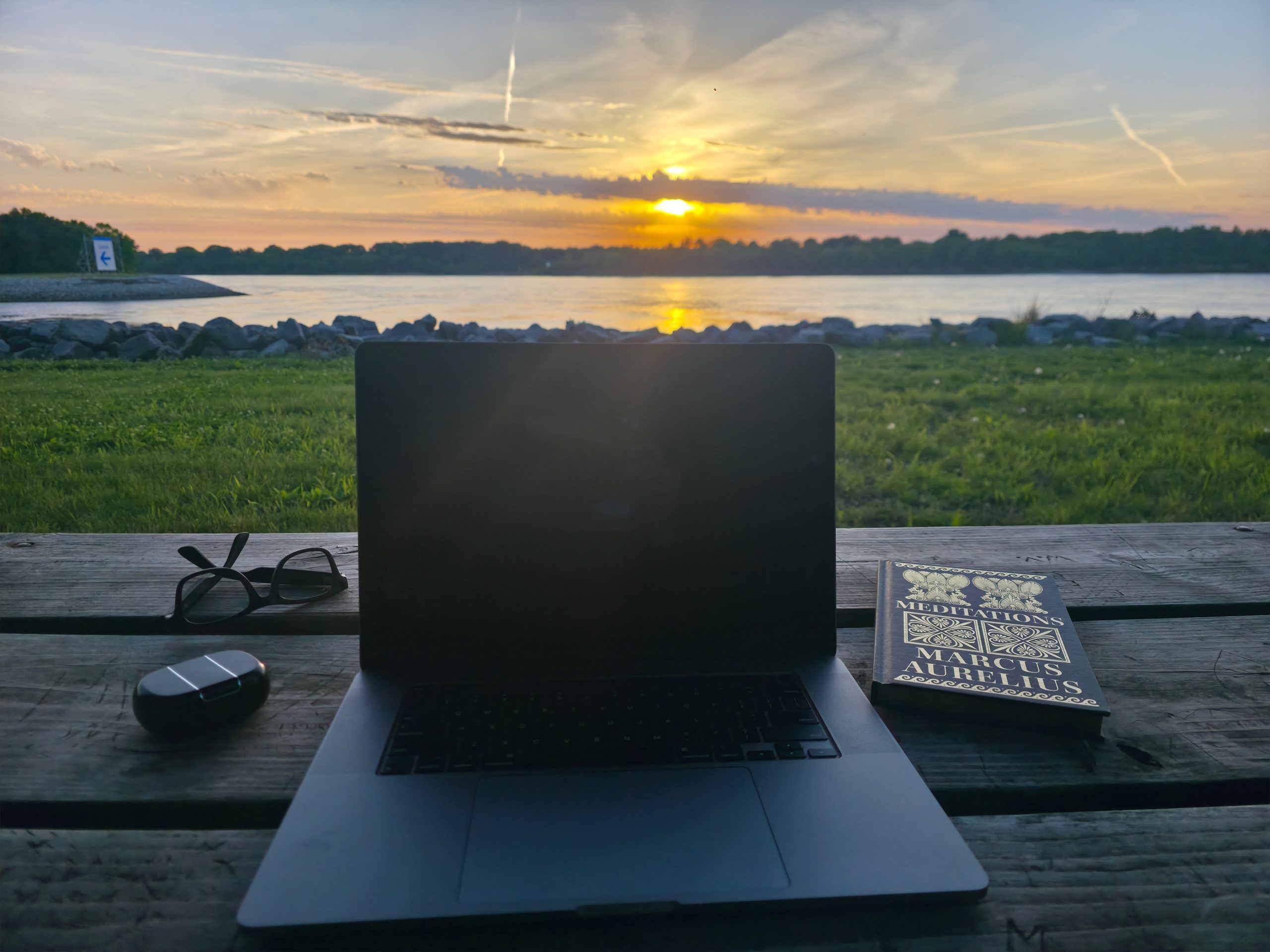
Solitude became the floor that let the rest of my work get built. There is a specific kind of strength that only grows when I stop leaking energy into places that don’t deserve it. The kept promises I’d been making to myself needed somewhere quiet to land. The silence wasn’t empty. It was a workspace.
In order to rise and to climb, I had to spend less time in situations that dragged me away from the person I knew I could be. You cannot build a life of intentionality if you are constantly handing over your focus to rooms that want to scatter it. The climb isn’t just about adding upward effort; it’s about identifying and removing the anchors you’ve been dragging along behind you.
Every room I enter is doing something to me. Every person I spend time with is leaving an impression. You might think you’re strong enough to sit in the chair and not get a trim, but the shop exists for a reason.
If you don’t want the haircut, stay out of the shop.