
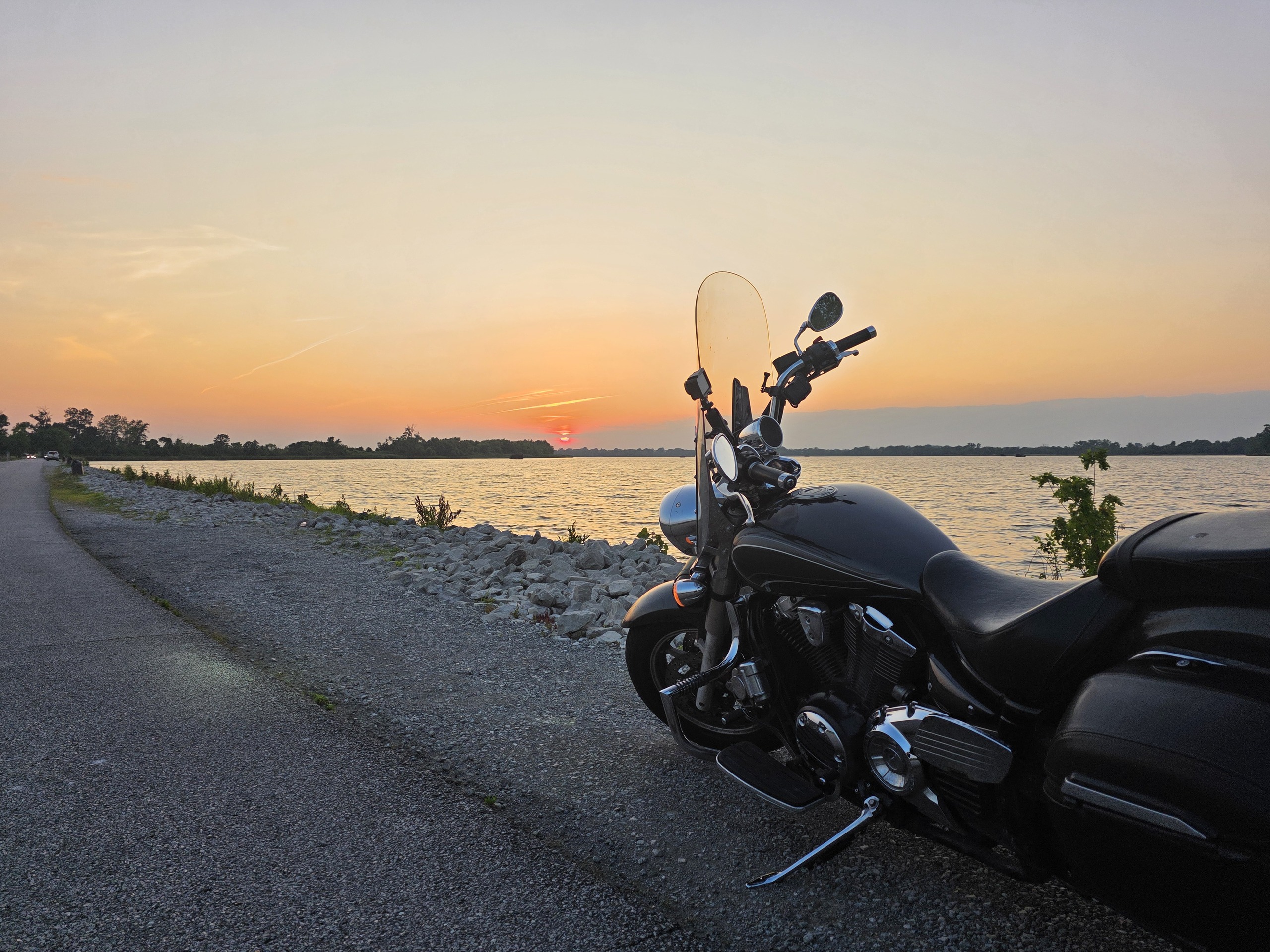
In about three weeks I leave for the Rocky Mountains on the bike. It is not a good time to go. Money is tight, and the bike just cost me more than I wanted to spend and needs more work before it is road-ready. Every practical voice says wait a month. Save a little. Get the repairs behind me. Get sharper with the cameras. Every one of those voices is right, and I am going anyway.
The case for waiting is real. Money is tight right now. The bike just took a significant unplanned repair and still needs more work before the trip. Another month would give me more practice with the cameras. Any sensible person looks at that list and says push it. The better month is available. I could take it without looking like a man who quit.
The Deferring Man’s Argument
That is the deferring man’s argument. The better month. The better year. When things settle down. When the ledger is less thin and the gear is sharper. Seneca spent an entire essay on this pattern in On the Shortness of Life. His point was that life is long enough if you actually use it. People waste the years by postponing the living itself. They assume a guaranteed later when the conditions will finally be right. Later is not guaranteed. The better year is a story the deferring man tells himself so the present does not have to carry the weight.
I know the cost of that story because I have already paid it. I spent roughly twenty years saying “one day” before I finally changed my life. The Year of the Line was the year I stopped treating the future as a place that would eventually show up ready. I know what deferral costs. That is why I do not trust the better-month argument even when every item on the list is true.
The Trap of Waiting for the Perfect Time
There is a practical reason. The work needs the footage. I have to go capture it for what I am building, and waiting a month does not serve that.
Underneath the practical reason is the one that actually drives it. I refuse to keep the experience in escrow for a later that was never promised. A motorcycle trip through the mountains is the kind of living people postpone until the money is better, the bike is perfect, and the calendar has cleared. Conditions are never perfect. Waiting for perfect is how the years go by unspent. The Daily Drift has a quiet cousin in this habit: the life postponed by default, the one I keep meaning to start once the conditions are right.
I call it the Rockies Reset. I hope for a clearer head and more gratitude, and I am naming that hope plainly. But I am not going in order to collect it. That would turn the trip into another form of deferral, living pinned on a reward that has not come yet. I am going because the trip is living, and living does not wait for the year the money is better and the cameras are sharper. If the boost comes, good. If it does not, I still went. The going was the point.
The Cost Is the Point
The cost stays real. Tight money. A bike that needed expensive work. A genuinely inconvenient time. Going anyway costs something. That is exactly why it counts. A refusal to defer that costs nothing proves nothing.
The trip is soon. The timing is bad. I am going. The better month will always be one month away. I am not waiting for it.