
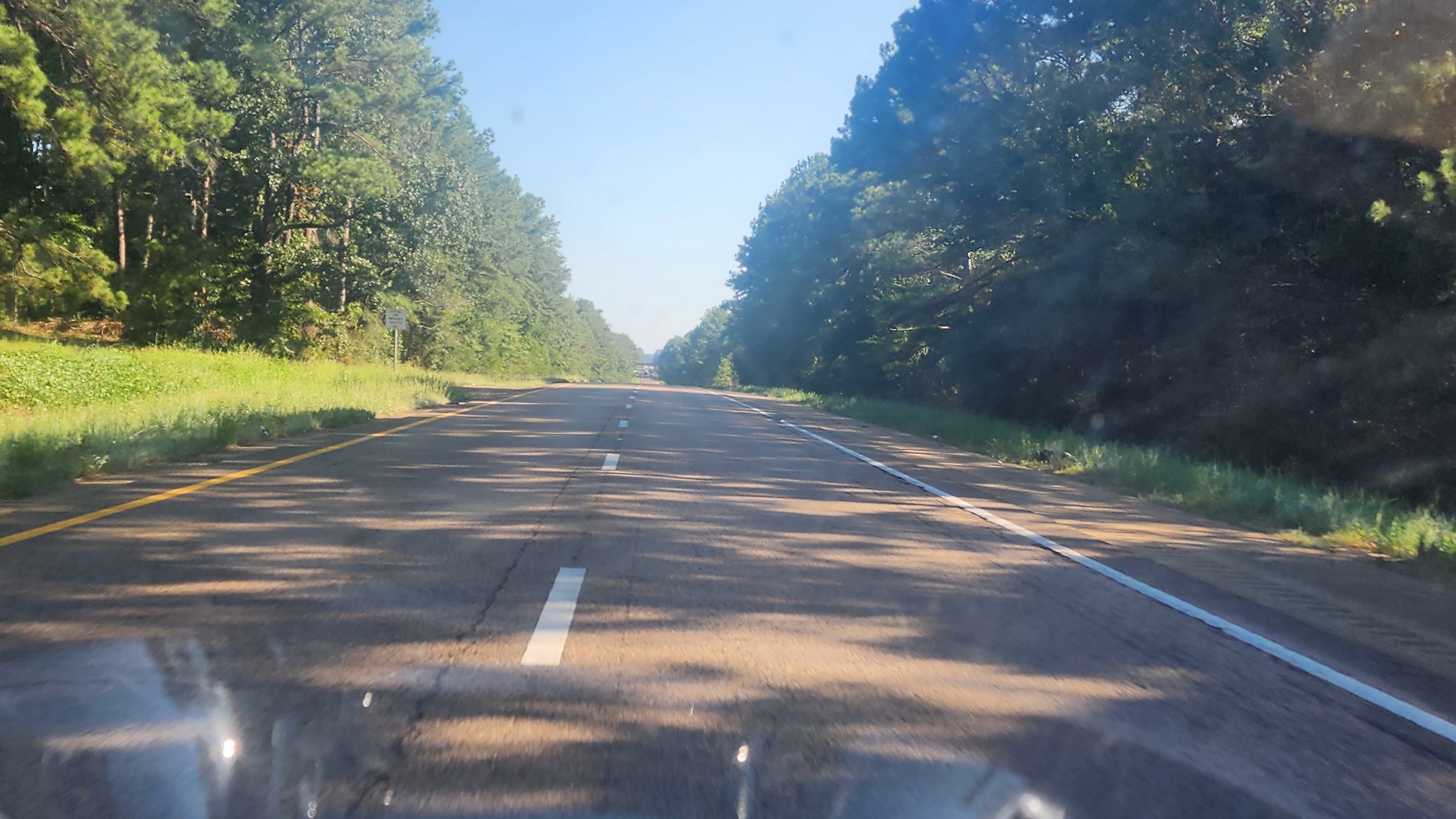
The interstate hums through my boots. It is a steady, vibrating heat that settles into the marrow of my shins. Ahead of me, the asphalt is a gray ribbon cutting through the deep greens of the Mississippi Delta. This is solo travel preparation. Not the kind you read about — the kind you ride into.
I am ten hours into a single-day ride from St. Louis to New Orleans. Six hundred and eighty-seven miles. One session. Solo.
My neck is stiff. My eyes are sand-gritty behind my visor. Every few miles, I shift my weight to keep my legs from cramping. This isn’t a leisure cruise. This isn’t about the scenery or the destination.
This is a stress test.
I was staring at a trip to Peru. Seventeen days. Solo. International. I had never done anything like it. The idea felt massive. It felt like something a “different version” of me would do: someone with more grit, more experience, more of whatever it is that world travelers have.
I didn’t try to psych myself into it. I didn’t read motivational quotes or wait for some sudden surge of confidence. I didn’t want to rely on a feeling that might vanish the moment I touched down in Lima.
I needed evidence.
I needed to know if I could handle the silence of my own head for twelve hours. I needed to know if I could manage the logistics of a breakdown when I was the only person coming to save me.
So, I engineered a smaller hard thing. I drew a line on the map to New Orleans and decided to run it in a day. If I could survive the interstate and the isolation of the American South, I could survive the Andes.
The Math of the Drift
Most people live in a state of Daily Drift. They make vague promises to themselves about the “big thing” they’ll do someday. They wait for a moment of clarity that never arrives.
You can’t bridge the gap between who you are and who you want to be using only imagination. It doesn’t work. Imagination is flimsy. It breaks under pressure.
I knew that if I booked Peru without proof, I would spend the months leading up to it in a state of low-level anxiety. I would doubt my capability every time I had a bad day.
The NOLA ride was designed to kill that doubt. It was a deliberate test.
The goal wasn’t to have a perfect trip. The goal was to see what happened when the trip stopped being perfect. I didn’t have to wait long.
Losing to the Storm
I made it to New Orleans clean. The ride home was a different story.
North of Memphis, the sky turned the color of a bruised lung. The wind began to whip the bike sideways, tugging at my helmet. I could see the wall of rain ahead.
I tried to beat it. I opened the throttle, hoping to outrun the edge of the system.
I lost.
For twenty minutes, the sky opened. It wasn’t rain; it was a physical weight. The water found every gap in my gear. It soaked through my gloves and pooled in my boots. My visibility dropped to twenty feet.
I was cold, wet, and vibrating with the effort of keeping the bike upright in the gusts.
It was miserable. It was also exactly what I needed.
I realized that “hard” is just a set of physical sensations. It’s cold water on the skin. It’s a stiff neck. It’s the fatigue of the tired hours when the sun goes down and you still have 100 miles to go.
It isn’t a moral failure. It isn’t a sign that you don’t belong there.
It’s just weather.
The Five-Mile Gap
I like data. Before I left St. Louis, I tested my fuel range. I rode until the low fuel light flickered on, then I tracked exactly how far I could go. I made it 25 miles before the engine sputtered.
Twenty-five miles. That was my margin. That was the fact I carried in my pocket.
Halfway through the return leg from New Orleans, the light came on. I checked the GPS. The next gas station was 20 miles away.
I did the math. I had a five-mile cushion. I didn’t slow down. I didn’t worry. I had “tested” this.
Five miles short of the station, the bike died.
The interstate noise changed from a roar to a whistle of wind. I coasted onto the shoulder. The silence was absolute. The heat of the pavement radiated through the soles of my boots.
I was 600 miles from home. I was out of gas. My “tested” math had failed.
At home, riding around town, I got 25 miles. On the interstate, after the storm, I was speeding to air-dry, which killed my fuel range. I had forgotten to account for the variables.
I stood on the side of the road and felt the weight of it. This is the moment where most people quit. This is where the “I should have just stayed home” internal monologue starts.
But I wasn’t there for the gas. I was there for the failure.
An older man in a weathered truck eventually pulled over. He didn’t say much. He just motioned for me to get in. We drove to a station, bought a plastic can, filled it, and he drove me back.
He didn’t want money. He just wanted to help a guy who looked like he was in the middle of something.
As I poured the fuel into the tank, I realized the test was working. I hadn’t panicked. I hadn’t spiraled. I had a problem, I looked for a solution, and I executed.
The lesson wasn’t “don’t trust the fuel gauge.” The lesson was that I could absorb the blow of being wrong.
Breakdown Management
After I got back, I pulled the bike off at a lake near home. The sun was setting over the water. I sat back and looked at the bike.

The surface-level takeaway from the trip could have been about the mileage. It could have been a story about how much ground I covered.
But that would be a lie.
The NOLA ride didn’t prove I was a great traveler. It proved I could handle “breakdown management.”
International travel isn’t a series of postcard moments. It is a series of things going wrong. It is missed buses in the Andes. It is language gaps in a Colombian market. It is food that wrecks your stomach in Bangkok. It is getting lost in a city where you can’t read the signs.
The test was passed precisely because it went wrong.
I didn’t need to “find myself” in New Orleans. I needed to find out if the version of me that existed when the gas ran out was a version I could respect.
It was.
The Evidence File
I went home and booked Peru.
There was no hesitation. The anxiety was gone, replaced by a cold, hard piece of evidence. I had a 687-mile receipt that said I could handle being alone, being wrong, and being uncomfortable.
Since that ride, the arc has opened up.
I spent 17 days solo in Peru. I spent 12 days in Colombia. I have Thailand on the horizon for later this year.
None of those trips happened because I talked myself into them. They happened because I stopped asking my brain for permission and started giving my brain proof.
Most people spend so much time trying to convince themselves they’re ready for the big things. They wait for the right time. They wait to feel brave.
Bravery is a luxury. Evidence is a necessity.
If you are staring at a move you’re afraid to make, stop trying to talk yourself into it. Stop looking for the “ultimate guide” to being ready.
Build a smaller version of the hard thing. Run it. Let it break.
The test isn’t about whether it goes right. The test is about whether you can stay standing when it goes sideways.
You don’t need a map for the whole journey. You just need to prove you can handle the first five miles when the tank runs dry.
Go find your evidence.